

Established physiology and medical use
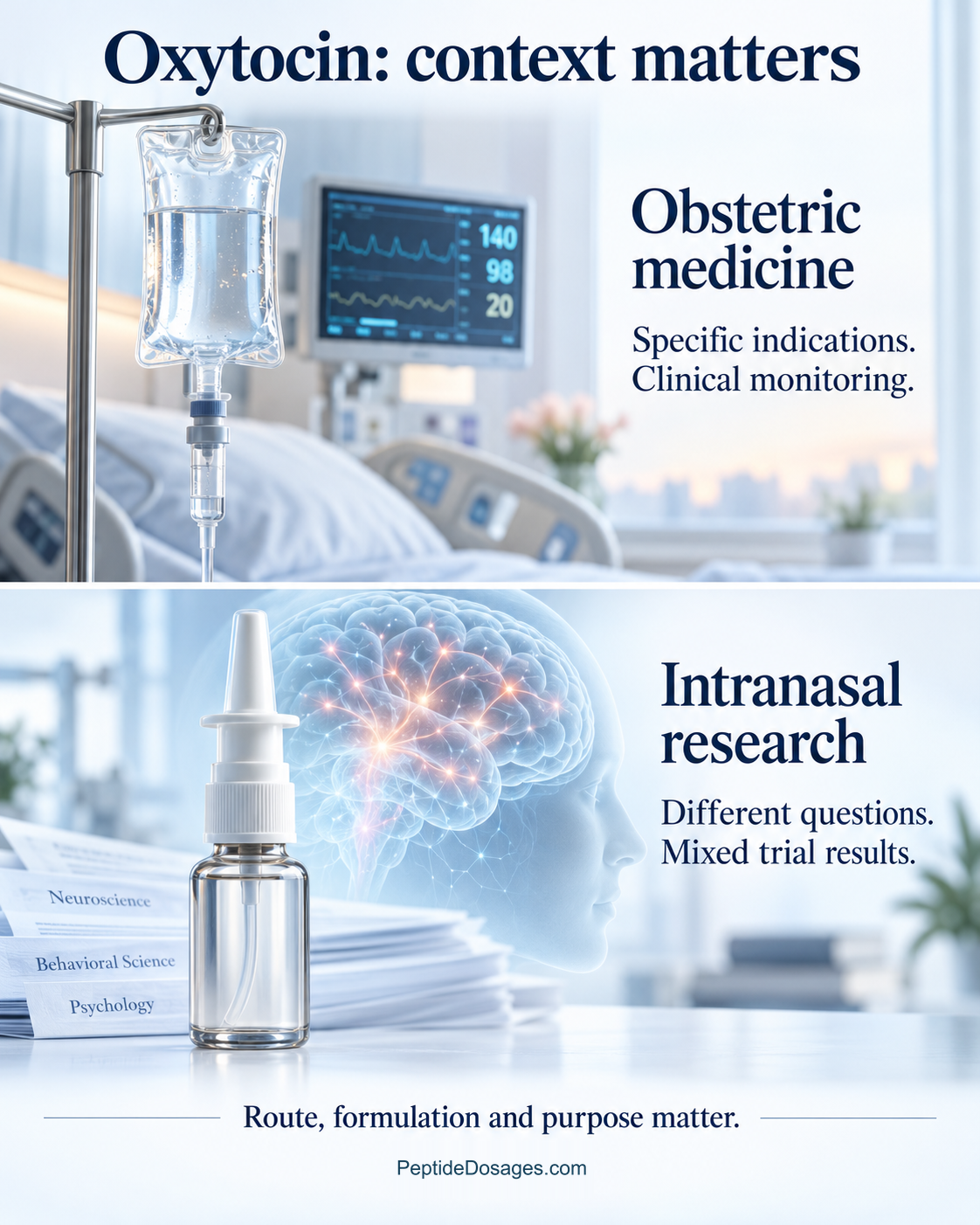
Oxytocin is a peptide hormone with important roles in uterine contraction and lactation. Prescription oxytocin also has established obstetric uses. These medical uses should be kept separate from experimental claims about mood, relationships, appetite or performance. The Pitocin prescribing information describes the authorized injection and its clinical context.
Clinical monitoring is central
The prescribing information emphasizes that response varies with uterine sensitivity. Obstetric administration requires professional supervision and monitoring. Inappropriate uterine stimulation and water intoxication are among the serious concerns addressed in the label. This makes oxytocin unsuitable for casual experimentation or for translating an online calculation into a personal injection plan.
Experimental claims need separate evidence
Intranasal studies examine a different route and often a different research question from obstetric injection. Findings must be read in that context. A trial of appetite or body weight does not establish a treatment for social difficulties, and a laboratory observation cannot establish a general emotional benefit. Intranasal Oxytocin for Obesity illustrates why the population, route and endpoint should remain explicit.
Units, formulations and product identity
An activity unit and a mass measurement describe different properties. A product-specific conversion should never be invented from a vial’s mass alone. Prescription injections, investigational nasal products and research material are not automatically interchangeable. Read the exact product information and seek professional advice about medical use, rather than extrapolating from another preparation.
Frequently asked questions
Does its natural occurrence make a product harmless?
No. A naturally occurring hormone can still have potent effects when administered. Context and monitoring are important.
Can one route’s results be applied to another?
Not automatically. Delivery, exposure and the condition studied can change the interpretation. Keep experimental research separate from established prescribing information.
References and further reading
Educational research overview. Individual diagnosis, treatment and product instructions require qualified clinical guidance.