

Understanding the amylin pathway
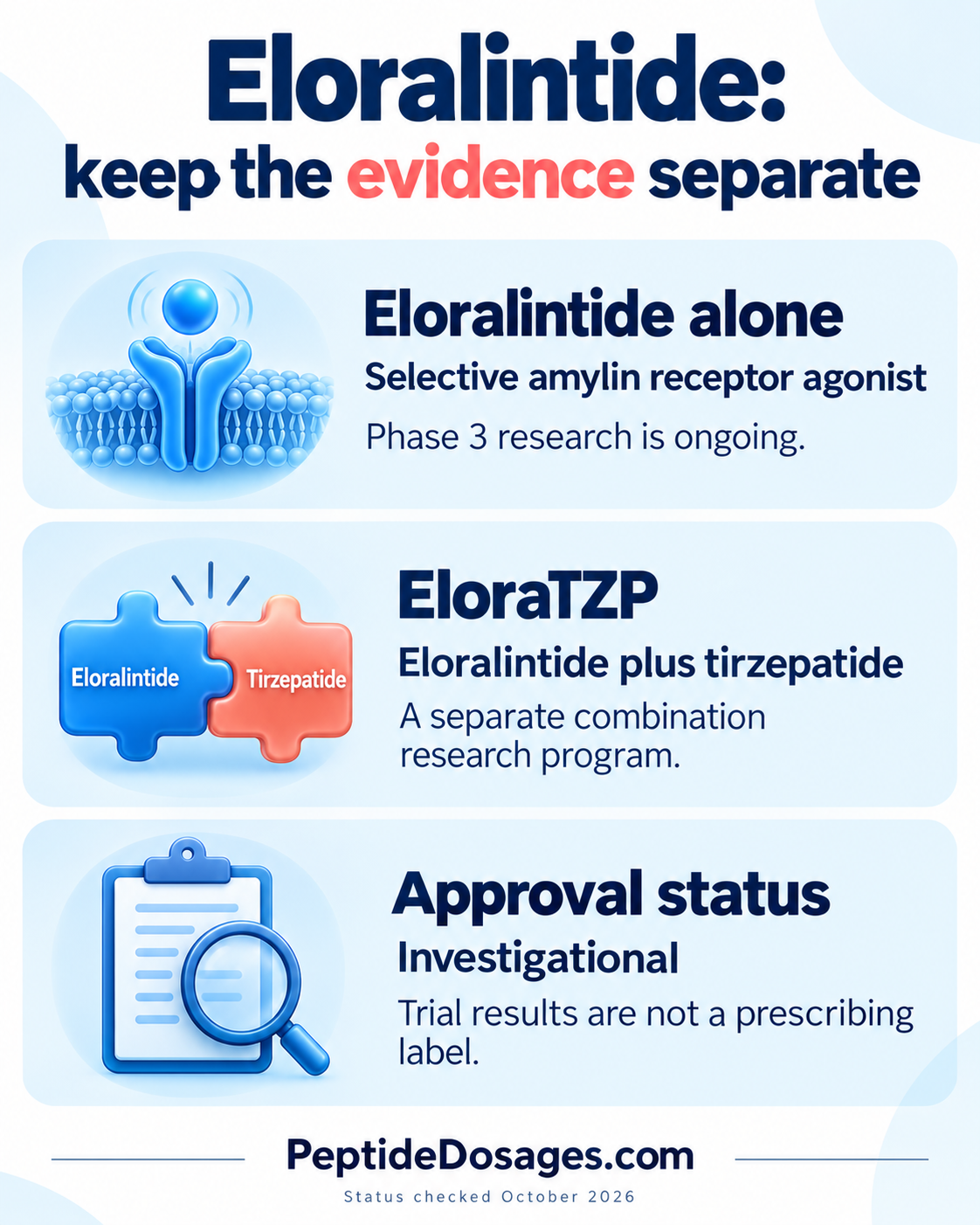
Eloralintide is being developed as a selective amylin receptor agonist. Amylin is involved in the regulation of appetite and food intake. This mechanism differs from medicines acting directly through GLP-1 receptors. The development program therefore asks a distinct question: whether selective amylin activity can offer a useful balance of weight reduction and tolerability. Lilly’s development overview describes the molecule and its investigational status.
What the human research shows
The published phase 2 study investigated eloralintide over 48 weeks in adults with obesity or overweight. It was randomized, blinded and placebo controlled. These features make the evidence more informative than uncontrolled before-and-after reports. Nevertheless, a trial average is a description of a particular study group, not a forecast for every person. Read the original trial record before comparing its results with another treatment.
Tolerability and remaining questions
The sponsor reports gastrointestinal adverse events and fatigue among the tolerability findings. Dose escalation and treatment discontinuations matter when interpreting the balance between benefit and burden. Larger studies help establish less common adverse effects and outcomes over longer periods. A promising trial does not by itself establish a routine prescribing schedule.
Single agent versus a combination
Eloralintide alone and its combination with tirzepatide are separate research programs. Differences in participants, formulations and statistical analyses limit simple percentage comparisons. A supplier’s blend should not be assumed to reproduce a clinical trial product. The ENLIGHTEN-1 study page provides current trial details and eligibility information.
Questions and practical context
Is a trial amount a treatment recommendation?
No. Randomized trial groups describe research conducted under a protocol; they are not instructions for independent treatment.
What should readers check next?
Check the trial population, follow-up period, adverse events and current regulatory information. A clinician can discuss approved weight-management options and whether formal trial participation is appropriate.
References and further reading
Educational research overview. Individual diagnosis, treatment and product instructions require qualified clinical guidance.