

Two receptor pathways under investigation
Survodutide is a dual glucagon and GLP-1 receptor agonist being studied in metabolic disease. The two receptor activities are part of its development rationale; this is not simply another name for semaglutide. The pharmacological profiling publication describes the work behind its selection as a clinical candidate.
Separate obesity and liver-disease evidence
Weight-management trials and MASH trials answer different questions. MASH is metabolic dysfunction-associated steatohepatitis, a liver disease in which inflammation and injury can occur alongside fat accumulation. Body weight, liver inflammation and fibrosis are distinct endpoints. An improvement in one should not automatically be described as proof of an improvement in all three. The sponsor’s trial record describes a study focused on liver disease.
How to interpret a trial headline
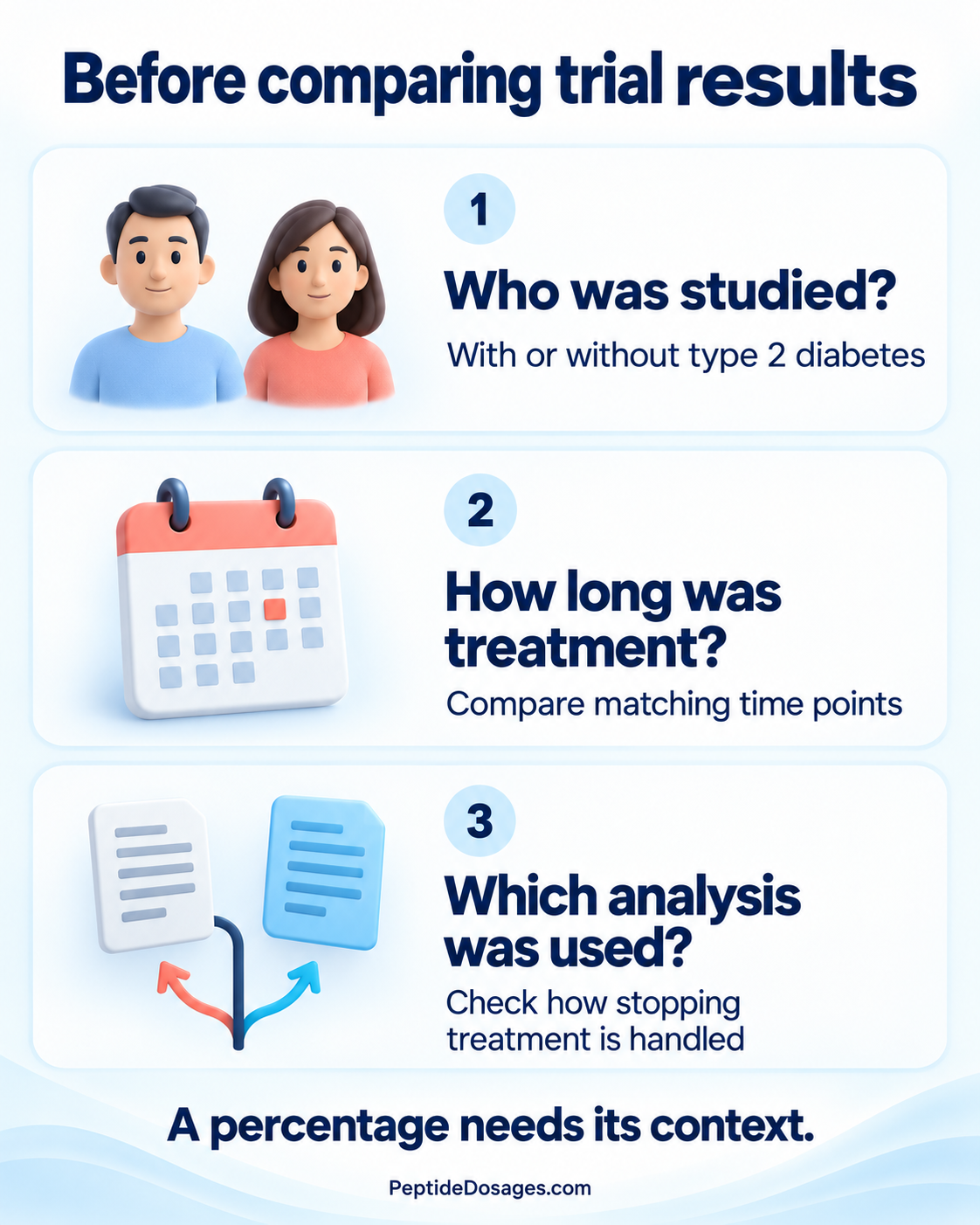
Before comparing percentages, check whether participants had type 2 diabetes, how long they were followed and whether the analysis includes treatment discontinuations. Look for the prespecified endpoint and comparator. A positive result supports a defined conclusion in a defined population; it does not guarantee an individual response or establish that two treatments are interchangeable.
Safety and development status
Clinical development evaluates adverse effects as well as efficacy. A trial registry can show a study’s purpose and eligibility, but a listing is not itself a positive result or regulatory authorization. Consult current official product and regulator information when making a treatment decision. Research-vial availability should not be read as evidence of an approved formulation.
Frequently asked questions
Does weight loss establish a treatment for liver fibrosis?
No. Fibrosis requires its own assessment and study endpoint. Read the liver-disease trial separately.
Where should a reader look for current information?
Use the original publication, trial registry and sponsor updates together, checking their dates. A clinician can explain which approved options apply to your diagnosis.
References and further reading
Educational research overview. Individual diagnosis, treatment and product instructions require qualified clinical guidance.