

A bone-forming osteoporosis medicine
Abaloparatide is an anabolic medicine used for osteoporosis in selected patients. It acts through the parathyroid hormone type 1 receptor pathway to support bone formation. It should be understood in the context of fracture prevention and an individual’s medical history, not as a general-purpose peptide for stronger bones. The patient information from MedlinePlus outlines its use and handling.
What the ACTIVE trial evaluated
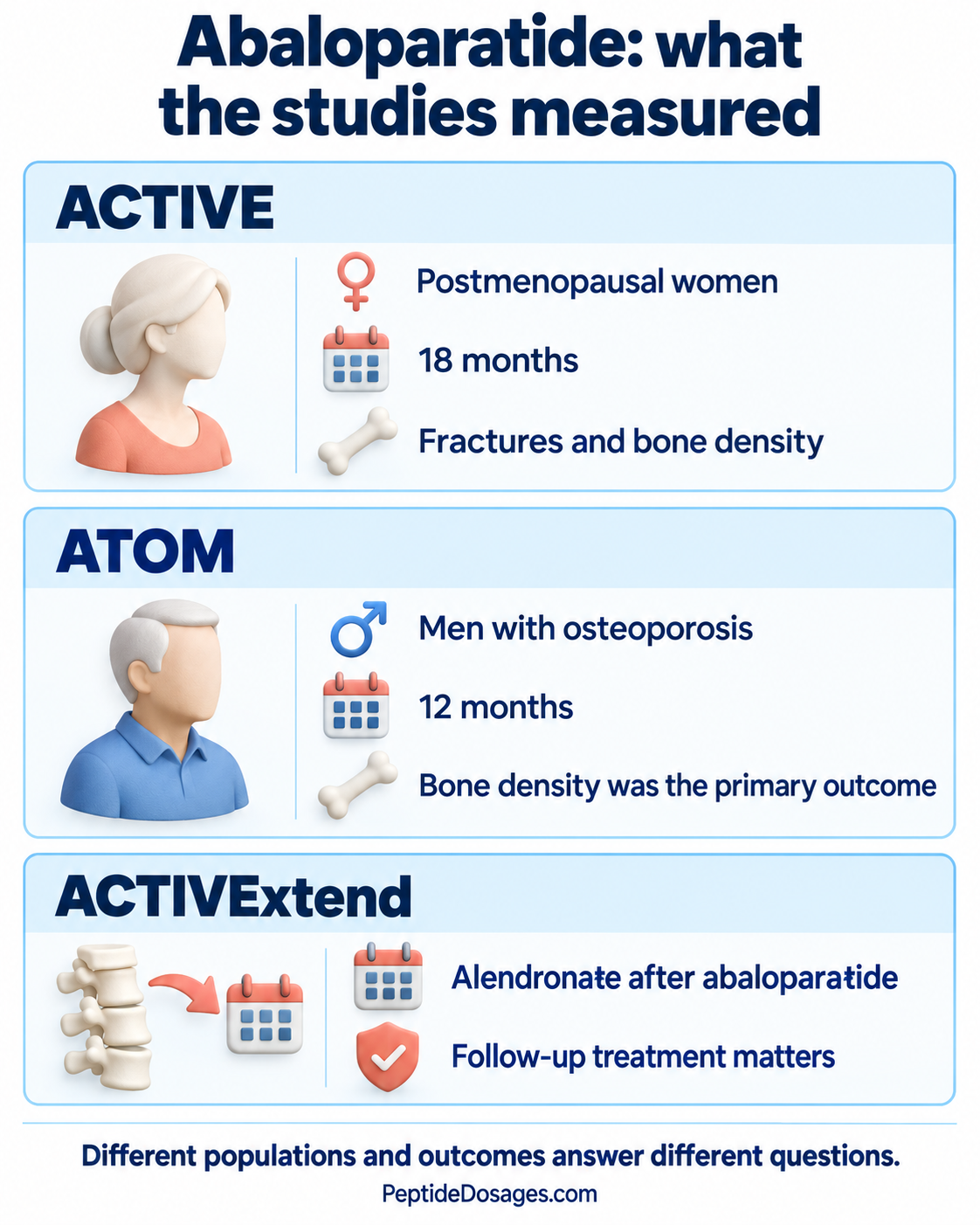
The ACTIVE randomized trial studied 2,463 postmenopausal women with osteoporosis over 18 months. Compared with placebo, abaloparatide reduced new vertebral and nonvertebral fractures and increased bone mineral density. The trial also included an open-label teriparatide group. That design detail matters when interpreting comparisons between active treatments. The trial publication sets out the population, outcomes and limitations.
Benefits need an individual context
A relative reduction can sound dramatic while concealing the starting likelihood of an event. Ask for the baseline fracture risk, the absolute change observed in a relevant population, and how alternatives compare. Previous fractures, other illnesses and prior osteoporosis treatments can affect the choice. A bone density result alone does not describe the whole treatment decision.
Safety and the prescription pen
Dizziness and lightheadedness are among the effects described in patient information. Discuss medical conditions and other medicines before treatment. Follow the exact pen instructions and do not transfer its contents to another syringe. The supplied product leaflet governs storage and disposal. Online research-vial information cannot substitute for those directions.
Frequently asked questions
Is abaloparatide identical to teriparatide?
No. They are different medicines within a related therapeutic approach. Evidence and instructions must be checked for the particular product.
What is useful to ask a clinician?
Ask why this option fits your fracture risk, how response will be monitored, what adverse effects require attention, and what treatment follows the planned course.
References and further reading
Educational research overview. Individual diagnosis, treatment and product instructions require qualified clinical guidance.