
Reading a three-ingredient label
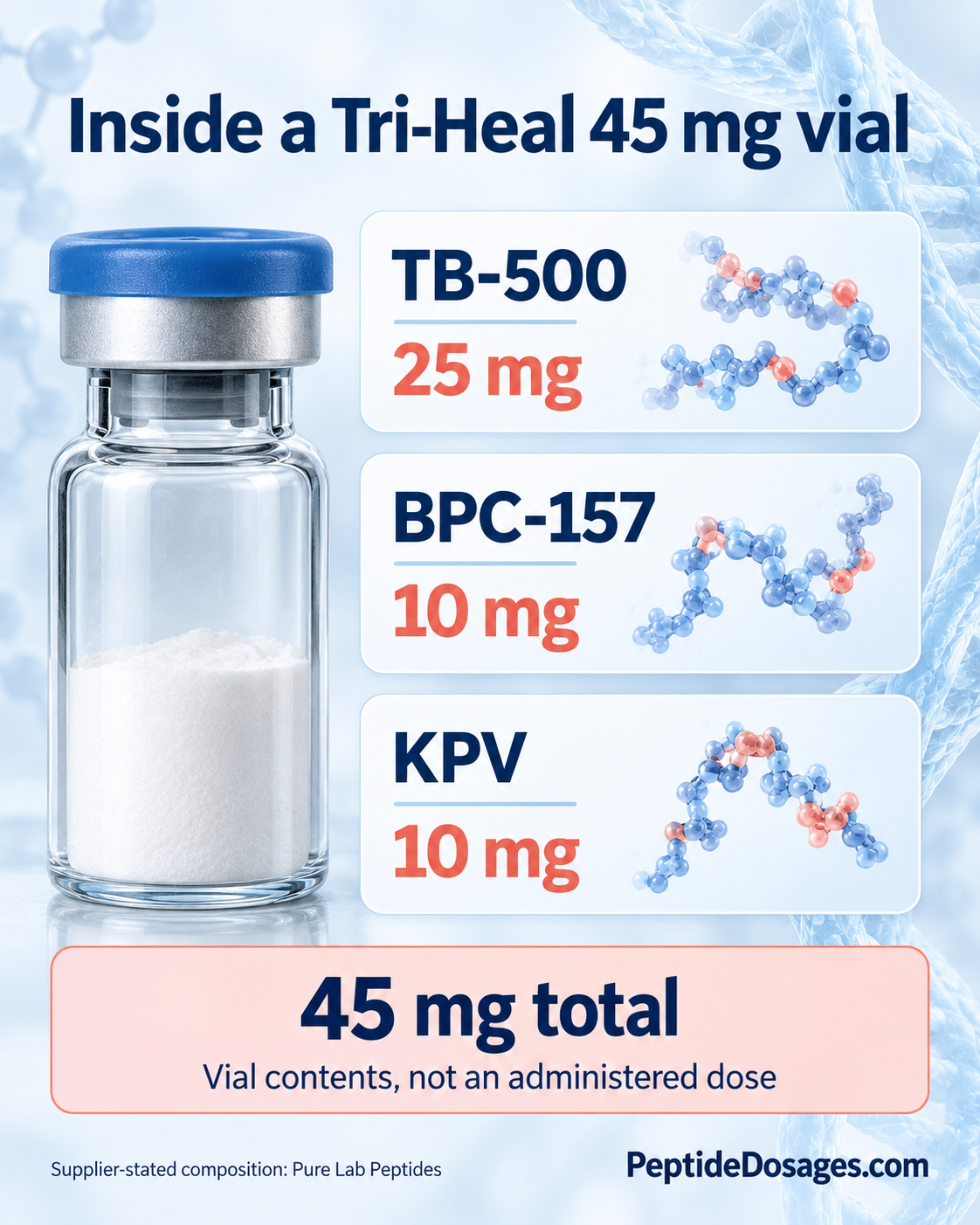
Tri-Heal is a blend name, so the exact ingredient list matters more than the name alone. The illustrated 45 mg reference lists TB-500, BPC-157 and KPV. A total vial amount describes the container; it does not establish an administered amount, a suitable combination or a clinical benefit.
What component studies can show
A BPC-157 experiment examined growth-hormone-receptor expression in fibroblasts isolated from rat Achilles tendons. That is evidence about a laboratory model, not proof that a three-component product repairs an injured human tendon. Read the BPC-157 cell study.
KPV and thymosin research
KPV has been investigated in experimental intestinal-inflammation research, including work on the PepT1 transporter. Thymosin beta-4 has a separate wound-healing research history. These are distinct materials, models and endpoints; placing their names together does not turn separate experiments into a trial of Tri-Heal. KPV and intestinal inflammation; thymosin beta-4 wound-healing study.
Questions about the finished blend
Ask whether a cited paper actually tested the same combination, chemical forms, proportions and route. Check what the comparison group received and whether the outcome was a laboratory marker or a patient benefit. Ingredient-level plausibility leaves questions about interaction, formulation and product quality unanswered.
Safety and next steps
FDA describes important gaps and characterization concerns for several research peptides, including BPC-157 and KPV. A supplier’s label cannot resolve those gaps. Use the FDA safety resource and original studies as starting points, and seek qualified care for an injury rather than translating a blend reference into self-treatment.
Primary references
- pubmed.ncbi.nlm.nih.gov · source 1
- pubmed.ncbi.nlm.nih.gov · source 2
- pubmed.ncbi.nlm.nih.gov · source 3
- www.fda.gov · source 4
Educational research overview. No individual treatment regimen is provided. Updated 22 October 2026.