
NAD+ Quick Reference
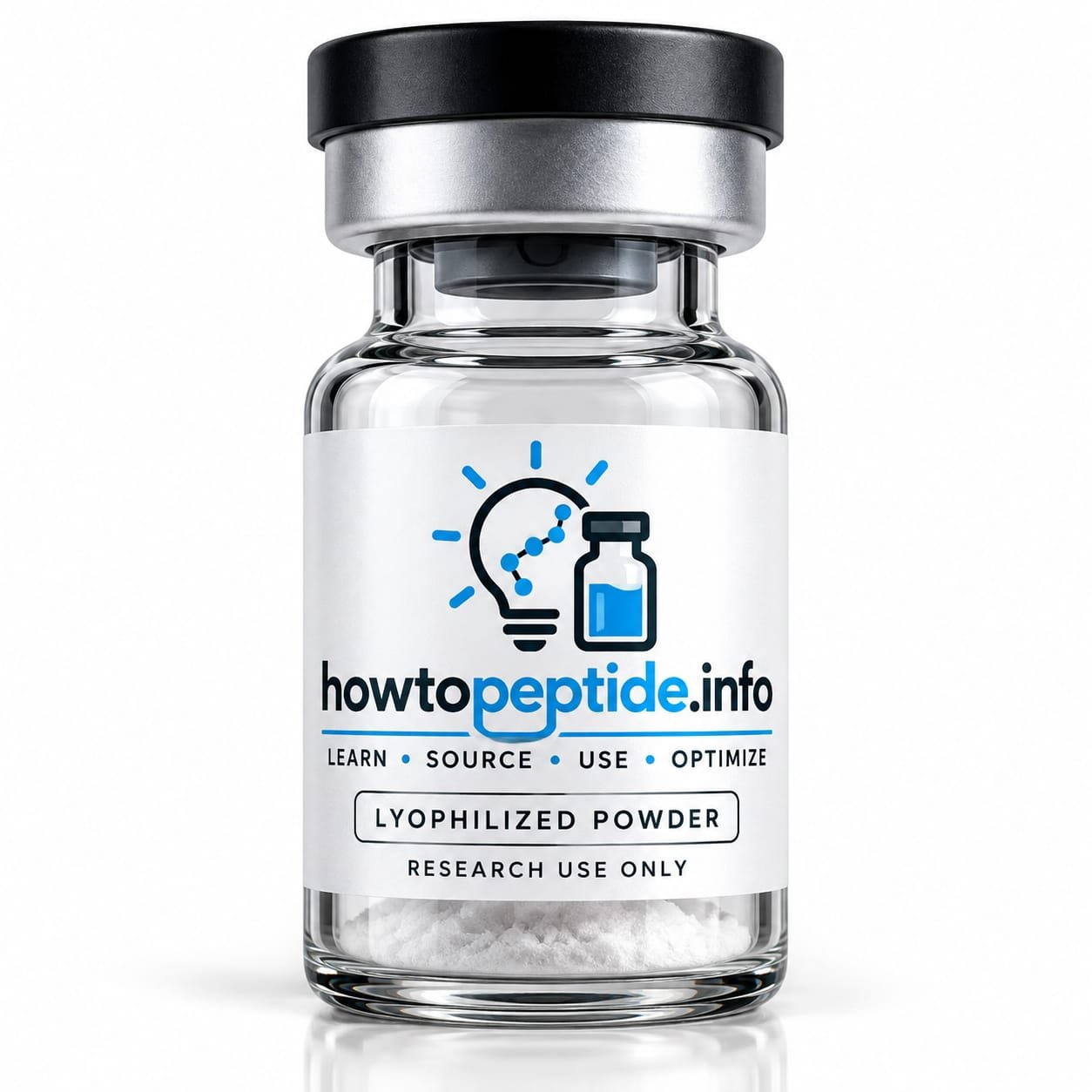
Reference arithmetic for the illustrated vial. The final volume below is an example, not an instruction for a specific product.
Community-Reported Use
Illustrative arithmetic for a 1,000 mg vial at a 3 mL final volume (about 333.3 mg/mL). These community-reported amounts are not an evidence-based or individualized dosing recommendation.
| Week / Phase | Amount per Administration | U-100 Units (mL) | Frequency |
|---|---|---|---|
| Week 1 | 50 mg | 15 units (0.15 mL) | Once daily |
| Week 2 | 75 mg | 22.5 units (0.225 mL) | Once daily |
| Weeks 3–8 | 100 mg | 30 units (0.30 mL) | Once daily |
| Weeks 9–12 | 100 mg | 30 units (0.30 mL) | Once daily |
| Weeks 13–16 | 100 mg | 30 units (0.30 mL) | Once daily |
Frequency: The schedule shown is community-reported. U-100 syringe units are volume markings, not peptide international units. This table presents concentration and volume arithmetic only; it does not establish safety, efficacy, or an appropriate regimen.
Concentration & Measurement
A vial’s labeled amount and its final solution volume describe different quantities. Divide the amount by the final volume to calculate concentration. Keep the same mass or activity unit throughout the calculation.
| Calculation | Relationship |
|---|---|
| Concentration | Vial amount ÷ final solution volume |
| Volume for an example amount | Example amount ÷ concentration |
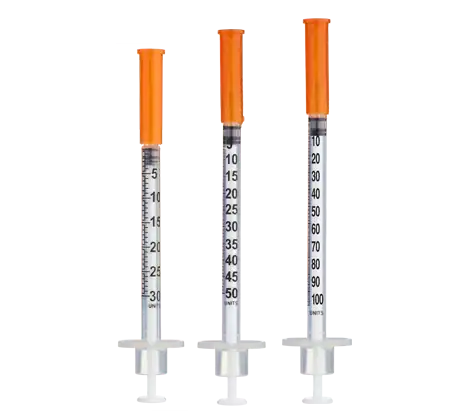
| U-100 scale marking | Volume in mL × 100 |
One U-100 scale unit represents 0.01 mL on that device. It does not define a universal peptide dose. IU measure substance-specific biological activity; do not apply an IU-to-mg conversion from a different substance.
Use the calculator to check an arithmetic example. A tool cannot decide which clinical dose or preparation is appropriate.
Product & Preparation Context
For NAD+, confirm the exact product name, labeled strength, formulation and intended use before interpreting a reference page. Similar names or vial sizes do not establish that products are interchangeable.
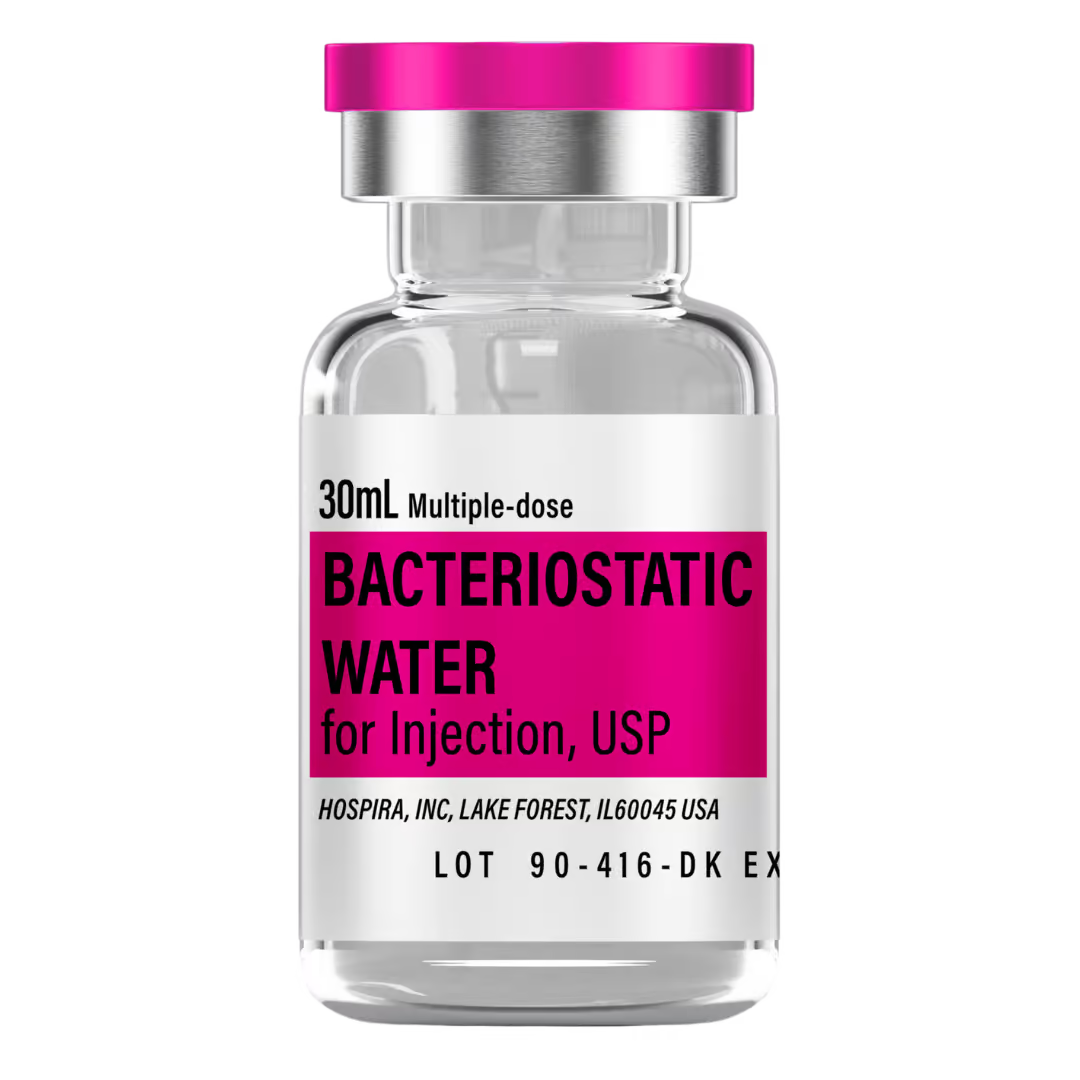
Use the diluent, final volume, preparation method and storage conditions specified by the manufacturer or dispensing pharmacy. A research label, visual illustration or online chart does not establish identity, sterility or suitability for administration.
For general concepts, read the reconstitution guide and the measurement guide.
Vial & Supply Images
The original reference images are retained below to identify the illustrated vial and supplies. Their inclusion is not a recommendation to buy a product or use a particular preparation method.
Research Context & Sources
When reading evidence about NAD+, distinguish the study’s actual formulation, route, population and endpoint from a general claim about a compound. Findings in cells or animals do not establish clinical benefit in people. A directory entry is not regulatory approval.
Clinical amounts, frequency and treatment duration depend on the exact product, indication and individual assessment. This page does not provide an individualized regimen.
- Research source 1 · doi.org
- Research source 2 · pubmed.ncbi.nlm.nih.gov
- Research source 3 · doi.org
- Research source 4 · pubmed.ncbi.nlm.nih.gov
- Research source 5 · pmc.ncbi.nlm.nih.gov
- Research source 6 · pmc.ncbi.nlm.nih.gov
- Research source 7 · pubmed.ncbi.nlm.nih.gov
- Research source 8 · pubmed.ncbi.nlm.nih.gov
- Research source 9 · www.cdc.gov
- Research source 10 · www.ncbi.nlm.nih.gov
- Research source 11 · pmc.ncbi.nlm.nih.gov
Storage & Handling
Keep the exact product’s instructions with the vial. Record preparation and discard dates where applicable. Protect the product from temperature excursions and other conditions outside its documented limits.
A clear solution does not prove sterility or potency. Set aside a vial with a damaged seal, unreadable label, unknown history or unexpected appearance and ask a qualified professional to assess it.
See the storage guide and CDC injection safety guidance.