
Separate the components from the combination
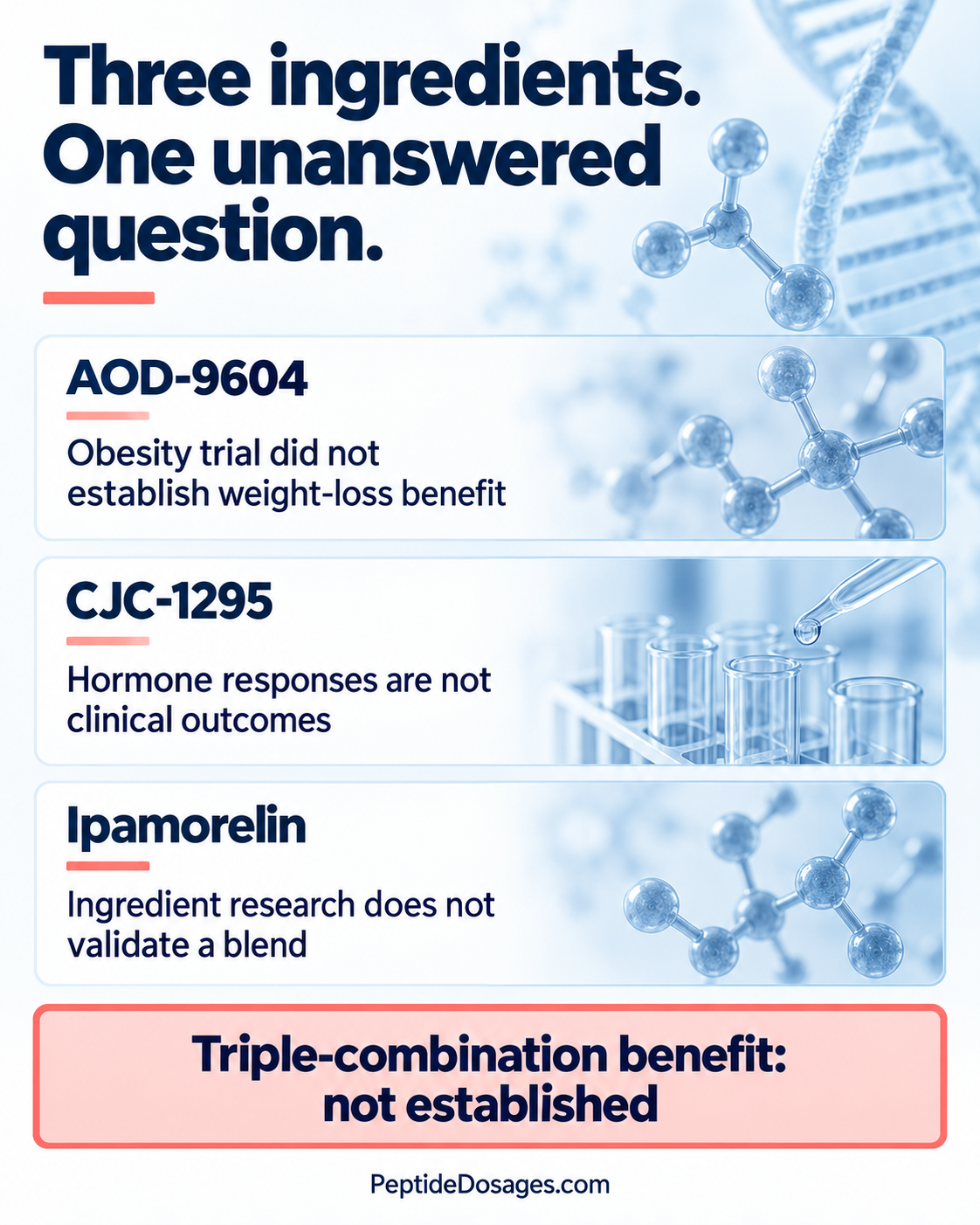
AOD-9604, CJC-1295 and ipamorelin appear together in some research-blend listings. Each name refers to a different research substance. Evidence about one ingredient needs to remain separate from a claim about the finished three-part preparation.
What CJC-1295 research measured
A study in healthy adults examined CJC-1295 and reported sustained changes in growth hormone and IGF-I. Hormone concentrations were the measured outcomes. That study does not by itself establish that a marketed triple blend improves fat loss, recovery or sleep. Read the CJC-1295 study.
What ipamorelin research adds
Foundational ipamorelin research described its growth-hormone-secretagogue pharmacology. A pharmacology finding helps explain a biological question; it is not evidence that adding a third ingredient improves a clinical outcome. Match the exact substance and study setting before drawing a conclusion. Read the ipamorelin pharmacology paper.
Safety needs its own evidence
FDA identifies limited safety information and potential immune-response or characterization concerns for AOD-9604, CJC-1295 and ipamorelin preparations. An appealing mechanism does not cancel those concerns. Review the FDA resource for the substance-specific wording and current context.
How to assess a blend claim
Look for research on the finished preparation, a suitable comparator, meaningful outcomes and transparent adverse-event reporting. Check whether a claimed benefit was directly measured or inferred from a hormone marker. Neither a concentration calculation nor a combined ingredient list answers those questions.
Primary references
Educational research overview. No individual treatment regimen is provided. Updated 22 October 2026.