
On this page
- Quick reference
- Dosage chart and four steps
- Supplies needed
- Vial strength and activity units
- Product-label context
- Interpreting dose information
- Storage and handling records
- Monitoring and warnings
- What the chart calculates
- Evidence boundaries
- Keeping clear records
- Measurement checks
- Important note
- Sources and Further Reading
- Related research, protocols, and guides
HCG Quick Reference (5000 IU Vial)
- Vial contents
- 5000 IU HCG
- Final volume
- 2 mL
- Concentration
- 2500 IU/mL
- One U-100 unit
- 25 IU in 0.01 mL
Calculation reference only. Confirm product identity and instructions independently of vial strength.
HCG Dosage Chart
Dosing & Reconstitution Guide
Educational guide for reconstitution and intermittent dosing
Standard Protocol (2 mL = 2,500 IU/mL)
| Week/Phase | Dose per injection (IU) | Units per injection (mL) |
|---|---|---|
| Weeks 1–12 | 500 IU | 20 units (0.20 mL) |
Frequency shown in supplied chart: Three times weekly subcutaneously (for example, Monday, Wednesday and Friday), yielding 1,500 IU per week. This is a source schedule illustration, not individualized medical advice.
Reconstitution Steps
- Confirm the exact product and supplied diluent.
Use the diluent, volume, and sterile technique specified by the product label or dispensing pharmacy.
- Use only the documented final volume.
The 2 mL shown here is for the concentration arithmetic in this example; follow product-specific instructions for any real preparation.
- Mix only as directed.
Follow the exact label or pharmacy instructions for dissolving the powder; do not shake unless the product directions specifically say to.
- Label and store as directed.
Record preparation details and follow the product-specific storage and beyond-use instructions.
Dosing Calculations
- 250 IU = 10 units (0.10 mL)
- 500 IU = 20 units (0.20 mL)
- 1,000 IU = 40 units (0.40 mL)
High-Dose Schedule Illustration (not a recommendation)
| Week/Phase | Dose per injection (IU) | Units per injection (mL) |
|---|---|---|
| Weeks 1–4 | 1,500 IU | 60 units (0.60 mL) |
| Weeks 5–8 | 2,000 IU | 80 units (0.80 mL) |
| Weeks 9–12 | 1,000 IU | 40 units (0.40 mL) |
Frequency shown in supplied chart: Three times weekly. The source describes this as post-cycle recovery or severe suppression use; that claim is not an established recommendation for self-directed use.
Important product-label conflict: The supplied screenshot lists subcutaneous administration, but current PREGNYL prescribing information specifies intramuscular use only and sets indication-specific dosing under clinician supervision. Do not use this chart to determine a route, dose, or treatment plan. See the PREGNYL prescribing information and the AUA/ASRM male infertility guideline.
For educational reference only. Not medical advice. Use only under a qualified prescriber and follow the exact product label.
Supplies Needed
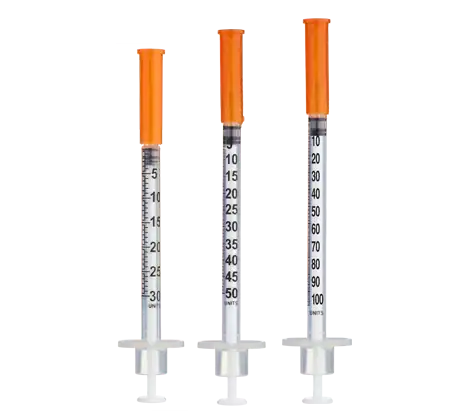
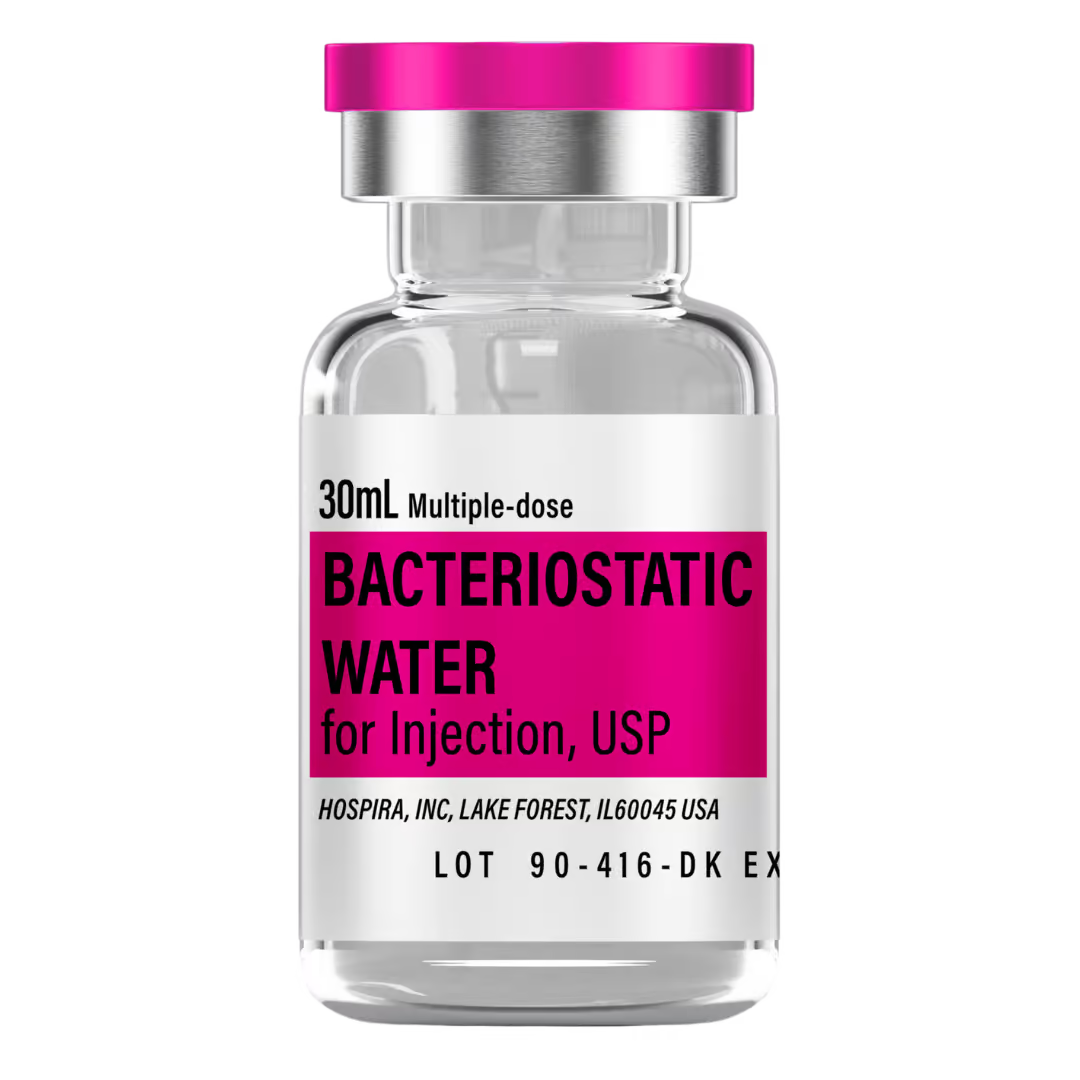
Illustrated reference equipment. The exact product instructions determine the appropriate diluent, measuring device and handling procedure.
Vial strength and activity units
HCG vial strength is expressed in international units of biological activity. IU and micrograms are different quantities; a general conversion should not be assumed. At 2,500 IU/mL, 0.01 mL contains 25 IU.
Product-label context
The PREGNYL prescribing information describes a particular prescription formulation and specific medical uses. A label for that medicine does not authenticate a different 5,000 IU research vial. Compare product identity and instructions before drawing conclusions. [1]
Interpreting dose information
A concentration calculation cannot choose a dose. The prescription label states that regimen selection depends on the indication and patient circumstances. Clinical decisions require the appropriate product instructions and qualified professional assessment. [1]
Storage and handling records
Use the exact product documentation for diluent, storage conditions and discard interval. Record the supplier, lot, labeled IU, final volume and preparation date together. Do not transfer a storage interval from a different formulation.
Monitoring and warnings
The PREGNYL label describes ovarian hyperstimulation syndrome and the need for appropriate specialist monitoring in fertility treatment. It also discusses allergic reactions and other precautions. These are product-label warnings, not a complete assessment for another vial or person. [1]
What the chart calculates
A vial contains a stated total activity. Dividing that activity by the final liquid volume gives activity per mL. The chart then converts a sample activity to volume. It does not estimate response, determine suitability or establish an administration route.
Evidence boundaries
Prescription labeling connects a specific medicine with defined indications, contraindications and monitoring requirements. An illustration or activity label alone provides none of those assurances for a research product. Read the complete applicable prescribing information. [1]
Keeping clear records
Keep calculations and product documentation in one record. Distinguish the activity in the whole vial from activity per mL. Document any change in final volume and recalculate every example rather than reusing a previous chart.
Measurement checks
Confirm IU, mL and the device scale separately. On a U-100 scale, one marked unit is 0.01 mL; it is not automatically one IU of HCG. Check rounding against the graduations actually available on the measuring device.
Important note
This educational reference explains activity and volume calculations. It does not prescribe a dose, treatment cycle, preparation method or route. Seek qualified medical guidance for clinical use.
Sources and Further Reading
- 1. DailyMed. PREGNYL (chorionic gonadotropin) prescribing information. Product-specific indications, warnings and administration information.Read prescribing information
Related research, protocols, and guides
Continue with HowToPeptide measurement resources.